Why Are My Passport Photos Being Rejected? Here’s What You Should Know
Why Are My Passport Photos Being Rejected? Here’s What You Should Know
If you have ever found yourself asking why your passport photos were rejected, you are certainly not alone. It is something we hear regularly from people who come into the studio after having photos taken elsewhere, only to discover that their application has been delayed because the image did not meet the required standard.
It can be frustrating, especially when the photo looked “fine” at first glance. But passport photographs are not judged the same way as everyday photos. They are assessed against strict technical requirements, and even small issues can cause problems.
A passport photo is not just a simple formality. It is part of an identity document and needs to clearly and accurately represent the person in the image. That is why the requirements can be so specific, and why authorities are often quick to reject photographs that fall outside the published standards.
There are a number of common reasons passport photos get rejected.
One of the most frequent is incorrect size or composition. Passport photos usually need to meet very specific measurements, and the head must sit within a particular range inside the frame. If the image is cropped incorrectly, or the face appears too large or too small, it may not be accepted.
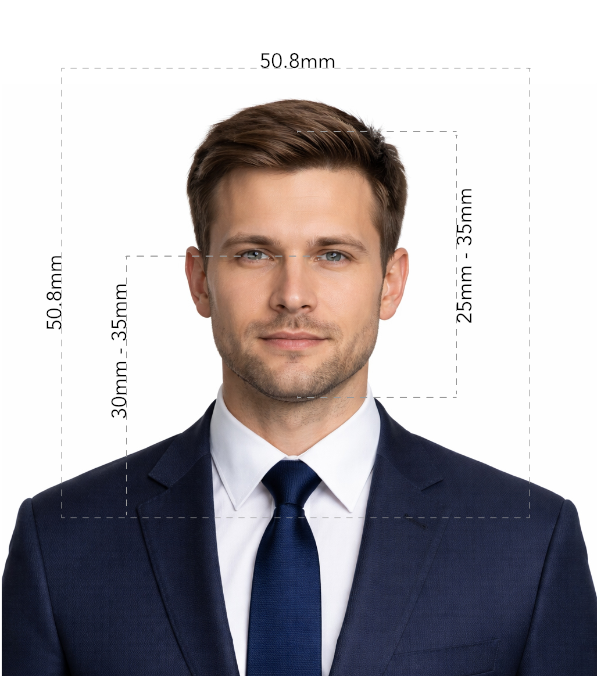
Image quality is another major issue. A passport photo needs to be sharp, clear, and evenly exposed. If the image is blurry, too dark, too bright, or lacking detail, it can easily be rejected.
Expression also matters. Most passport applications require a neutral expression, with the face clearly visible and the eyes open. Something as simple as an exaggerated smile, a tilted head, or a tense expression can affect whether the photo is considered suitable.
The background is another area where problems often arise. In many cases, the background must be plain, light, and free from shadows or distractions. If there are visible shadows behind the head, texture in the background, or anything else that interferes with clarity, the photo may not pass.
Glasses can sometimes create issues as well. Reflections on the lenses, obscured eyes, or even certain frame styles can all interfere with acceptance. Depending on the application, it may be better to remove them altogether.
Clothing can also play a role. While there is usually no strict dress code, it is sensible to avoid anything that blends into the background or creates visual confusion. For example, white clothing against a light background can sometimes make the image look less defined.
"The Good News Is That Most Of These Issues Are Entirely Avoidable When The Photo Is Taken Properly In The First Place."
At Gold Coast Passport Photography, passport and visa photos are prepared in a controlled studio environment using professional lighting and camera equipment. That means the image can be carefully checked for clarity, sizing, background, and overall compliance before you leave. It also means you are not rushed through the process or left hoping the photo will be accepted.
A lot of people are surprised by how technical passport photography really is. Because the lighting needs to be even and shadow-free, and the framing needs to be precise, there is far less room for error than most people expect. What seems like a minor issue can be enough to cause a delay.
That is why having your passport photo done professionally can make such a difference. It is not just about getting a nicer-looking image. It is about reducing the risk of rejection and making sure the photo is a clear, accurate, and compliant representation of you.
If your passport photos have been rejected before, or you simply want to avoid the stress of getting it wrong, it is worth having them prepared properly from the start. For most people, it is something you only do every 10 years, so it is worth getting it right the first time.