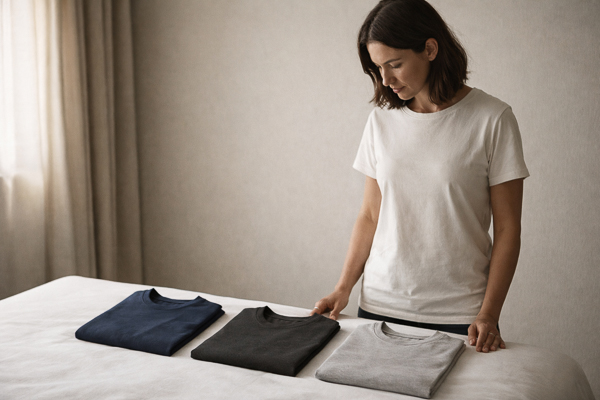
What to Wear for Your Passport Photo
It is one of the most common questions I get. “What should I wear for my passport photo?” And it is a fair one. A passport photo is not quite like any other portrait. There are rules to consider, compliance guidelines to meet, and a result that will follow you through airports, borders and bureaucracy for ten years or more.
The reassuring news is that it is usually not complicated. You do not need a wardrobe strategy. A handful of sensible choices before your appointment will almost always produce a noticeably better result.
The Safest Starting Point: Keep It Simple
In a passport photo, the subject is your face. Your clothing should support it, not compete with it.
Solid colours, clean necklines, and no large logos, printed text or busy patterns will almost always photograph better than something detailed or visually loud. The simpler the clothing, the more clearly your face reads in the final image, and the cleaner the result will look across different formats and sizes.
Which Colours Work Best
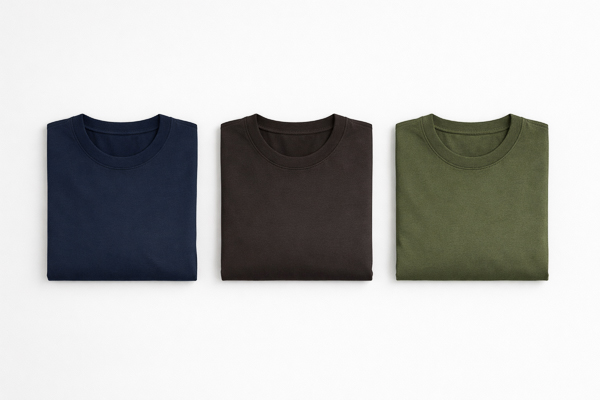
Darker tones tend to photograph particularly well in passport, visa and ID photography. Navy, charcoal, deep green, burgundy, brown and black are all rich colours that create clear visual separation from the light backgrounds that most international passport and visa requirements specify. They also tend to look polished and timeless.
White clothing is where the advice gets more nuanced. For Australian passport photos specifically, clothing colour is far less regulated than most people assume. The Australian Passport Office is primarily focused on a plain light background, correct contrast, and clear visibility of the face. Clothing rarely causes a compliance issue when the photo is taken properly.
For some international passport photos or travel visa applications, however, white clothing can be a problem, particularly where it blends with the required white background and reduces the separation between subject and backdrop. Canada, for example, discourages white clothing for this reason, while India explicitly restricts it.
In a well-controlled studio environment, the impact of white clothing can often be managed. In fact, it is my favourite approach for high-key portraits. In a retail department store or post office setup with uncontrolled lighting, it is harder to compensate for.
If you are having photos taken for a specific country’s visa requirements, the safest move is to ask. Requirements vary, and the right clothing choice for an Australian passport renewal may not be the same as for a Canadian Passport photo renewal, where clothing is more prominently visible in the frame.
Necklines, Collars and What to Avoid
A simple, open neckline or a classic collar is almost always the safest choice. It keeps the face and jawline clearly visible, reads neatly in the final image, and avoids the complications that can come with more elaborate styles.
A few things worth thinking about:
Thick or bulky necklines — polo necks, ruffled or very high collars can obscure the jawline or sit too close under the chin. They may not always cause a compliance failure, but they can make a photo feel constricted, and they limit the natural framing of the face.
Thin-strap and tube tops — fine for Australian applications in most cases, but worth considering for visa photos where the top of the chest may be more visible in frame, and where some countries’ cultural expectations may apply.
Uniforms — police, military or service uniforms are often not permitted, regardless of how professional they look. Every country is different, and if the ID photo is for your organisation then this rule may not apply, but for passports it is generally discouraged. Most issuing authorities, including the Australian Passport Office, specify everyday attire. The purpose of a passport photo is to represent how you normally look, not how you look in a professional or organisational context.
Logos and heavy branding — for some countries, text and logos on clothing are not acceptable. For others, they may not be a compliance issue, but they can still be distracting and may increase the chance of rejection. In a small identity photograph, anything that pulls attention away from the face is effectively working against you.
A Note on Religious or Cultural Dress
If you regularly wear a religious head covering, it can be included in your passport photo under specific conditions. For Australian passport photos, religious coverings are permitted provided they are plain, worn without decoration or pattern, and leave the full face clearly visible — from chin to forehead, with the sides of the face, including the eyebrows, unobscured.
If you are uncertain whether your particular covering meets the requirements, it is worth confirming before your appointment. It is a simple question, and it is far better to clarify it upfront than to discover a problem later.
Jewellery
Less is better here. Everyday jewellery — small earrings or a necklace — is generally not an issue at all. Large or highly decorative pieces that obscure are generally not accepted, and anything with a significant reflective surface, can catch studio light and create specular highlights. These bright reflections create distractions in the final image and can affect the result. If in doubt, keep it out. Again, less is more here as well.
Grooming Matters More Than Most People Expect
Clothing gets all the attention, but grooming often has a bigger influence on the final result.
This is not about looking formally presented or particularly styled. It is about looking like yourself, at your best — which is exactly what a good passport photo should achieve. Hair tends to have the greatest impact, and the choice is yours in this respect, as long as it does not cover your face. Once again this guideline varies between countries with many requiring ears visible, whilst others don't specify at all.
A clean shave can also work well, and well-groomed facial hair can also provide a cleaner look, but styles change, and the choice here again is yours. Compliance and an overall well-presented appearance simply contribute to a result that looks polished rather than rushed.
If you wear makeup, a balanced, natural approach works best. Heavy or very dramatic makeup can change the authenticity of your appearance, and these looks may read differently as styles change, potentially leading to hold-ups at airport facial recognition scanners. Good professional lighting does a great deal of the work for you, so there is no need to over do it.
The Simple Rule of Thumb
If you want one easy principle to apply before your passport photo appointment, wear something plain, well-fitted and easy on the eye. Choose clothing that suits your hair colour and works well against a light background. Keep the neckline simple, the jewellery minimal, and the overall look clean — especially if you choose to have your ID photo done quickly for convenience at a regular post office or department store.
At Gold Coast Passport Photography, we bring the same care to passport and visa images that we bring to portrait work, using controlled lighting, careful positioning and attention to detail so the result is not just compliant, but genuinely well presented.
If you want to talk through what to wear before you book, I am happy to help, and you can always bring an extra option if you are not sure. And when you are ready, book your appointment with us and we will make sure the photo you are carrying for the next decade is one you are comfortable with and proud to present.