The New Australian Passport Is Stunning… But It Comes at a Price
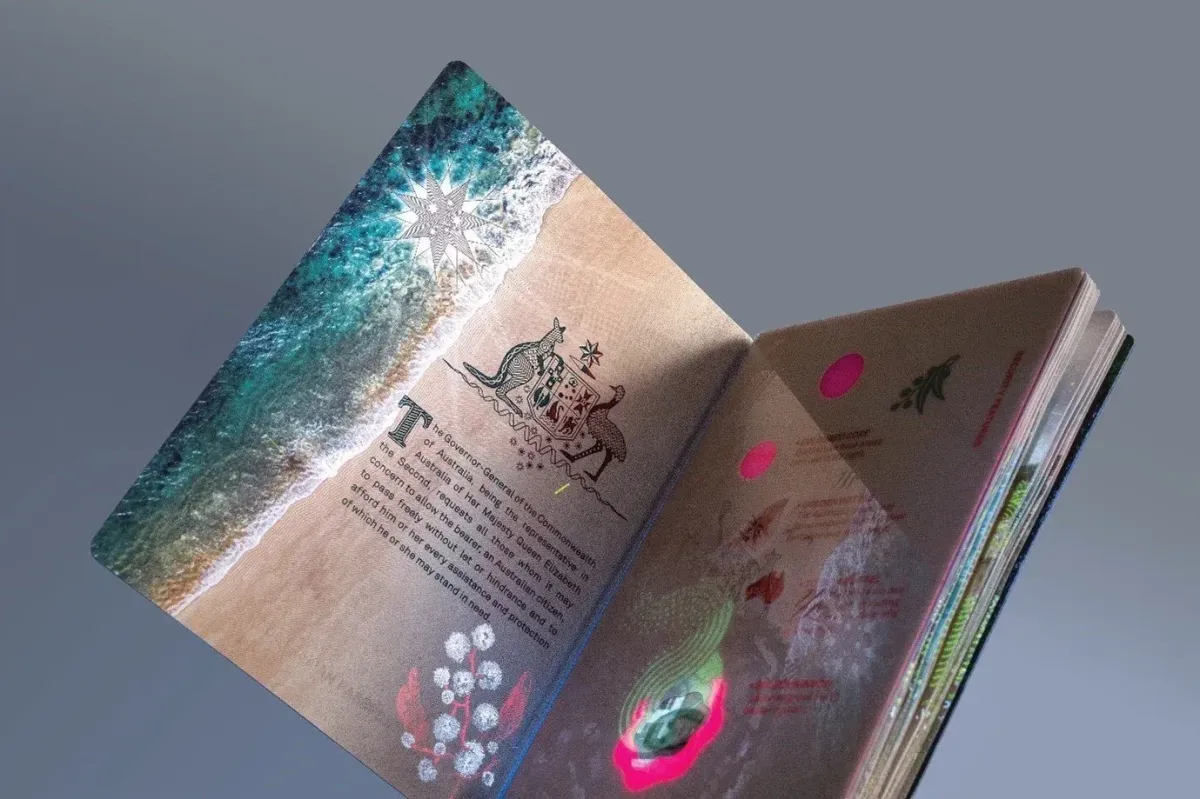
There is no denying it, the new Australian R series passport, introduced in 2023, is one of the most visually impressive and technically advanced travel documents ever produced.
Refined, intricate and unmistakably Australian, it represents a clear shift in how identity documents are designed, produced and trusted. And yet, like many things that reach this level of sophistication, it comes at a cost.
A Passport That Feels Australian
For years, passports around the world have evolved quietly in the background. This latest Australian passport feels different. it feels more Australian. And it feels more intentional. This is no longer just a booklet for international travel. It is a carefully designed system of national and personal identity.
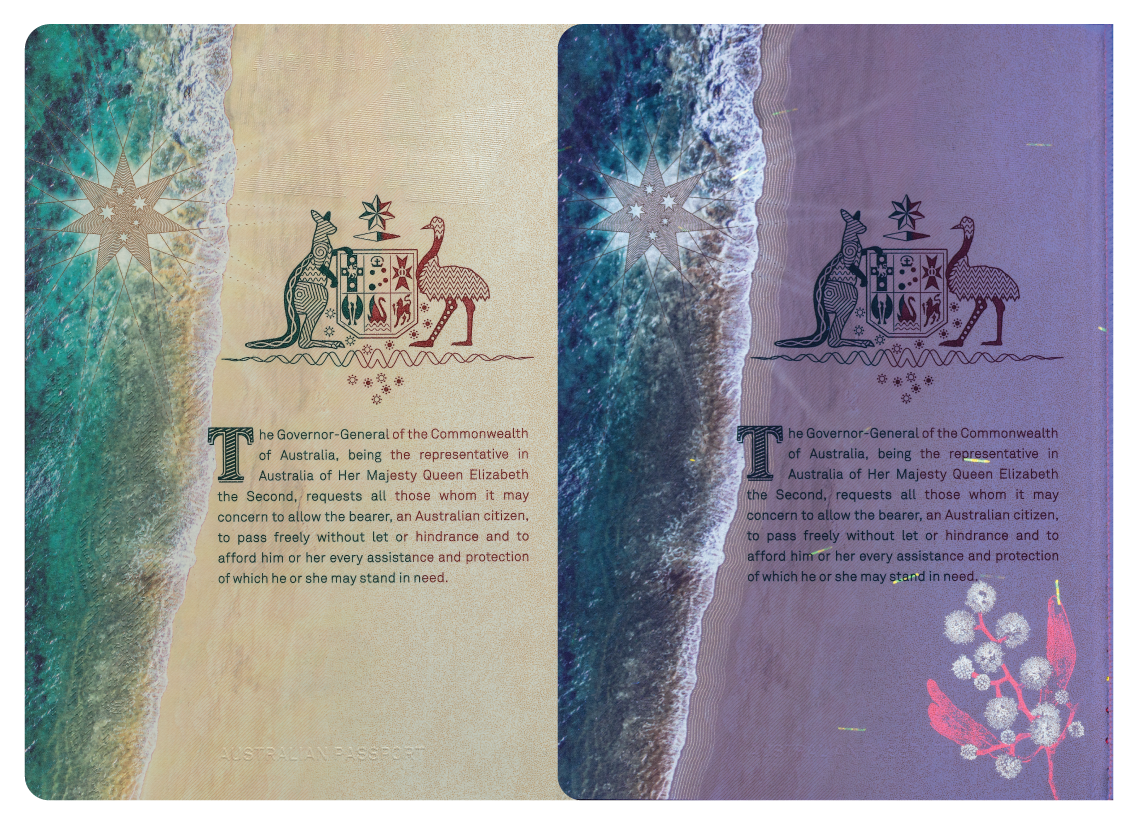
Under normal light, the pages are clean and refined. Under UV light, they transform. Hidden illustrations emerge — native wildlife, layered landscapes and intricate micro-details that feel closer to fine art than functional design.
From a photographer’s perspective, it is immediately recognisable. This has been designed with precision, not just manufactured for compliance and rubber stamps.
If you are interested in the design behind the artwork and embedded features, the Australian Passport Office provides a more information here: https://www.passports.gov.au/help/australian-passport-design
Security For The Current World We Live In
Beyond the visual appeal, this passport introduces a level of security that reflects the realities of modern identity verification.
It incorporates:
A polycarbonate data page with laser-engraved information
Embedded biometric chip technology for digital identity verification
Advanced holographic overlays and ghost imaging
Microprinting and layered security backgrounds
UV-reactive inks and multi-spectrum authentication features
Aligned with modern international biometric standards, this is a document built for a world where identity needs to be verified quickly, reliably and globally. This is not just an upgrade. It is a necessary evolution.
The Cost of Getting It Right
And this is where the conversation becomes more grounded. Because while the passport is objectively better, more secure, more durable and more refined, it is also more expensive.
Australian passport fees have steadily increased, and this version continues that trend. Renewing multiple passports is no longer a routine task, it is a decision. For individuals, it may be manageable. For families, it becomes a real financial consideration.
As a teenager, before I even had my driver’s licence, getting a passport still felt financially within reach. It was not just a travel document, it was a practical form of proof of age and a valuable part of building up the 100 points of id so often needed for applications in everyday life. It served a purpose well beyond overseas travel. Today, that same decision feels very different. The cost has risen to a point where, for many people, a passport is no longer something you obtain simply because it is useful to have. It is something you commit to when you genuinely need or intend to travel.
There is an inherent tension here. We expect world-class security. We expect global trust. But those expectations come at a cost that is ultimately carried by the traveller.
The Australian passport is exceptional. Whether the price feels justified will depend on your perspective.
The Detail Most People Still Get Wrong: The Passport Photo
For all the innovation built into the passport itself, one critical element has evolved quietly alongside it:
The passport photo.
With the shift from analogue photography, including multi-lens Polaroid systems, to modern digital capture, the expectations around passport images have tightened significantly.
There was a time when slight variations between submitted images were normal due to the nature of instant analogue film cameras. Faces are not perfectly symmetrical, and older capture methods reflected this, generally providing a “better side” for your passport photo.
Today, images are identical, precise, and expected to meet tighter tolerances. And this is where many applications still fall short. Not because people are careless, but because the image is often captured in poor lighting conditions or through automated systems designed for speed rather than accuracy.
With the sophistication of the passport, the passport photo also remains subject to strict technical requirements, particularly around lighting, contrast and facial clarity.
This was never about looking good. And it is not about looking bad either I like to add, but It is about being clearly and accurately identifiable.
Lighting plays a far greater role than most people realise.
Uneven lighting introduces shadows that interfere with facial recognition
Poor exposure flattens detail or exaggerates features
Incorrect contrast reduces biometric accuracy
As passports become more advanced, the tolerance for error does not increase, rather it tightens.
And the reality is this: a poorly lit image stands out even more against a document of this quality.
Get Your Passport Photo Done Right the First Time
Australia’s new passport is a remarkable piece of design and engineering. It is secure. It is sophisticated. And it is genuinely beautiful. But it also reflects a broader shift toward higher standards, higher expectations and higher costs.
We are no longer carrying simple paper documents. We are carrying highly engineered identity systems. And in a document of this calibre, every detail matters especially the one that represents you.
If you are applying for or renewing your passport, it is worth understanding that compliance is only part of the equation. As any experienced photographer knows, the real difference is often in the lighting, and in the quality of that light.
At Gold Coast Passport Photography, every image is captured in a controlled studio environment using studio lighting, precise positioning and careful guidance to ensure your photo meets official requirements while still representing you at your best.